Kitchen Chimney vs Range Hood: What’s the Difference?
September 07, 2026Kitchen chimney or range hood? Learn the difference, how each term is used, and what really matters when choosing the right ventilation system for your kitchen.
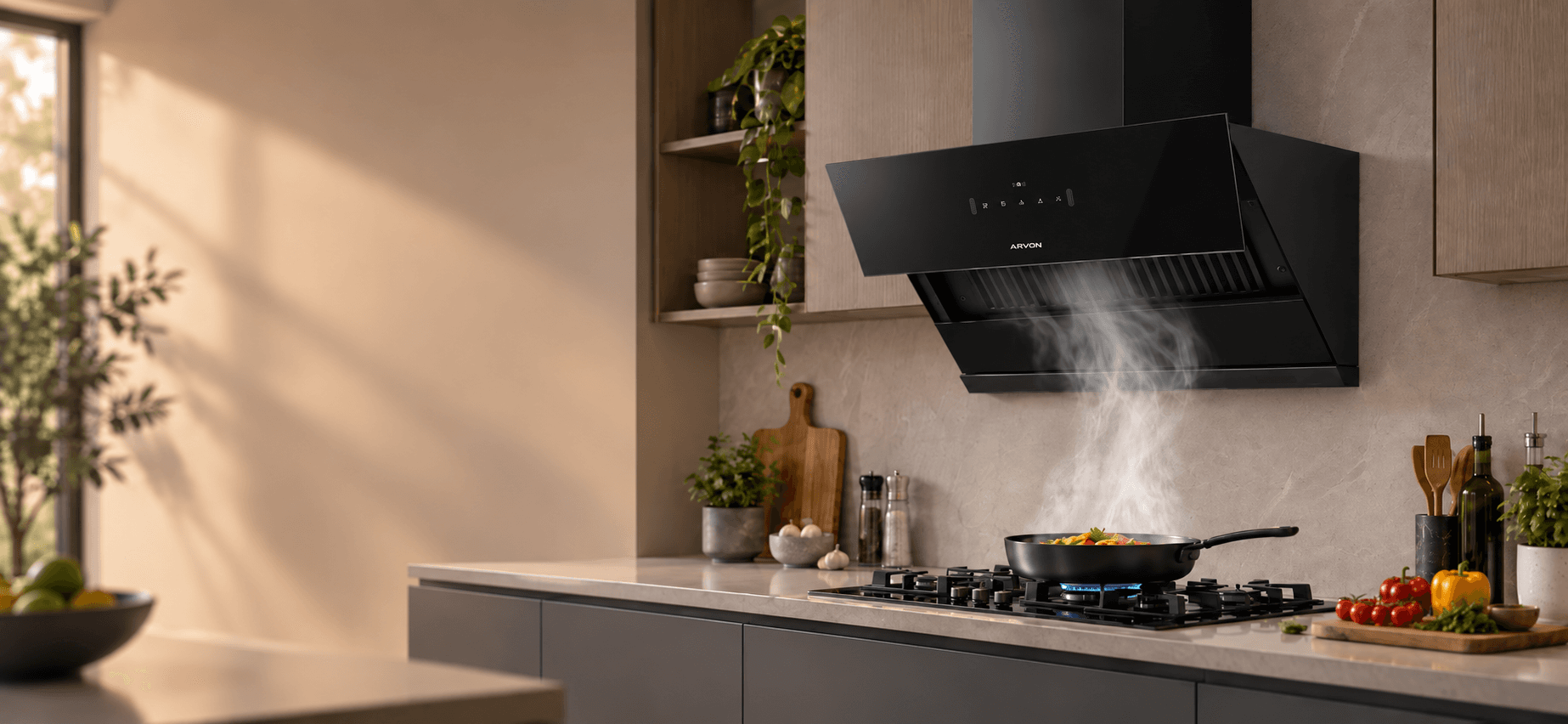
If you are researching kitchen ventilation, you may have come across two terms repeatedly: kitchen chimney and range hood. This often leads to a simple question—are they different appliances, or are they essentially the same thing?
In most modern kitchen-appliance contexts, a kitchen chimney and a range hood refer to the same basic type of appliance: a ventilation system installed above a hob or cooktop to capture smoke, steam, grease, and cooking odors.
The main difference is usually terminology rather than function.
The term range hood is commonly used internationally for appliances mounted above a cooktop or range. The term kitchen chimney is widely used in South Asian markets for the same category of product, particularly when the appliance includes a visible chimney-style duct cover.
This means that comparing “chimney vs range hood” should not simply be about choosing one name over another. The more important question is: which range hood or kitchen chimney has the right technology and performance for your cooking requirements?
What Does a Range Hood Actually Do?
A range hood captures contaminated air close to the cooking surface before it spreads throughout the kitchen.
Cooking can release:
- Smoke
- Steam
- Airborne grease
- Oil particles
- Heat
- Strong cooking odors
Without proper ventilation, these can spread to cabinets, ceilings, walls, countertops, and nearby living spaces.
A properly selected range hood helps create a cleaner, fresher, and more comfortable cooking environment.
Ducted vs Recirculating Ventilation
One of the more important differences between ventilation systems is not “chimney vs range hood,” but ducted vs recirculating operation.
A ducted range hood extracts contaminated air and pushes it outdoors through ducting.
A recirculating model filters the air and releases it back into the kitchen.
Where proper exterior ducting is possible, ducted extraction is generally useful for removing smoke, heat, moisture, and odors directly from the kitchen.
The best option depends on the kitchen layout, installation possibilities, and selected product.
Suction Is Important—but It Is Not Everything
Many customers compare kitchen chimneys using only the airflow or suction figure.
Airflow is important because it indicates how much air the appliance can move. However, a high airflow number alone does not explain how well the hood will perform once connected to real ductwork.
Another important specification is static pressure.
Static pressure indicates how effectively the range hood can move air against resistance created by ducting, bends, and the exhaust path.
A well-designed ventilation system therefore needs a good balance between airflow and static pressure.
Grease and Oil Separation Matters
Smoke is only one challenge created by cooking.
Frying and high-temperature cooking release fine grease and oil particles into the airflow. If these particles accumulate inside the range hood, internal components can become more difficult to maintain over time.
Selected Arvon Range Hoods use Nano Technology combined with a patented blower system to separate grease and oil from the airflow.
This helps reduce internal grease buildup while supporting cleaner airflow and consistent extraction performance.
What About Self-Cleaning?
Modern range hoods can also simplify maintenance through intelligent cleaning technology.
Selected Arvon models incorporate an automatic self-cleaning system that activates after accumulated operating time to help reduce grease buildup inside the range hood.
Self-cleaning does not mean that the entire appliance will never require maintenance. External surfaces, accessible grease collectors, and other user-serviceable parts should still be cleaned as recommended.
Instead, the technology is designed to make internal grease management easier.
Motor Technology Matters
The motor is another important component when choosing a kitchen chimney or range hood.
Modern models may use sealed AC motors or BLDC motors.
A high-quality motor should provide dependable extraction while operating consistently under everyday kitchen conditions.
BLDC technology can additionally provide precise motor control and strong pressure performance in premium range hood systems.
Controls and Everyday Convenience
Modern ventilation systems have also become easier to operate.
Depending on the model, features may include:
- Touch controls
- Hand-gesture control
- Multiple fan speeds
- Turbo extraction
- Automatic cleaning functions
- Modern display systems
The goal of these technologies is simple: powerful ventilation should also be easy to use.
So, Kitchen Chimney or Range Hood?
In most appliance-shopping situations, you do not need to choose between a kitchen chimney and a range hood based on the terminology alone.
They generally describe the same category of kitchen ventilation appliance.
Instead, compare the things that actually determine performance:
airflow, static pressure, motor technology, grease and oil separation, duct configuration, noise, cleaning system, controls, width, build quality, and installation.
The best kitchen ventilation system is not the one with the most impressive name—it is the one engineered to keep your cooking space cleaner and more comfortable under real everyday conditions.