Why Quality and Durability Matter When Choosing Kitchen Appliances
August 31, 2025Discover why build quality, durable materials, reliable motors, safety systems, strong burners, and long-term performance matter when choosing premium gas hobs, range hoods, and ovens.
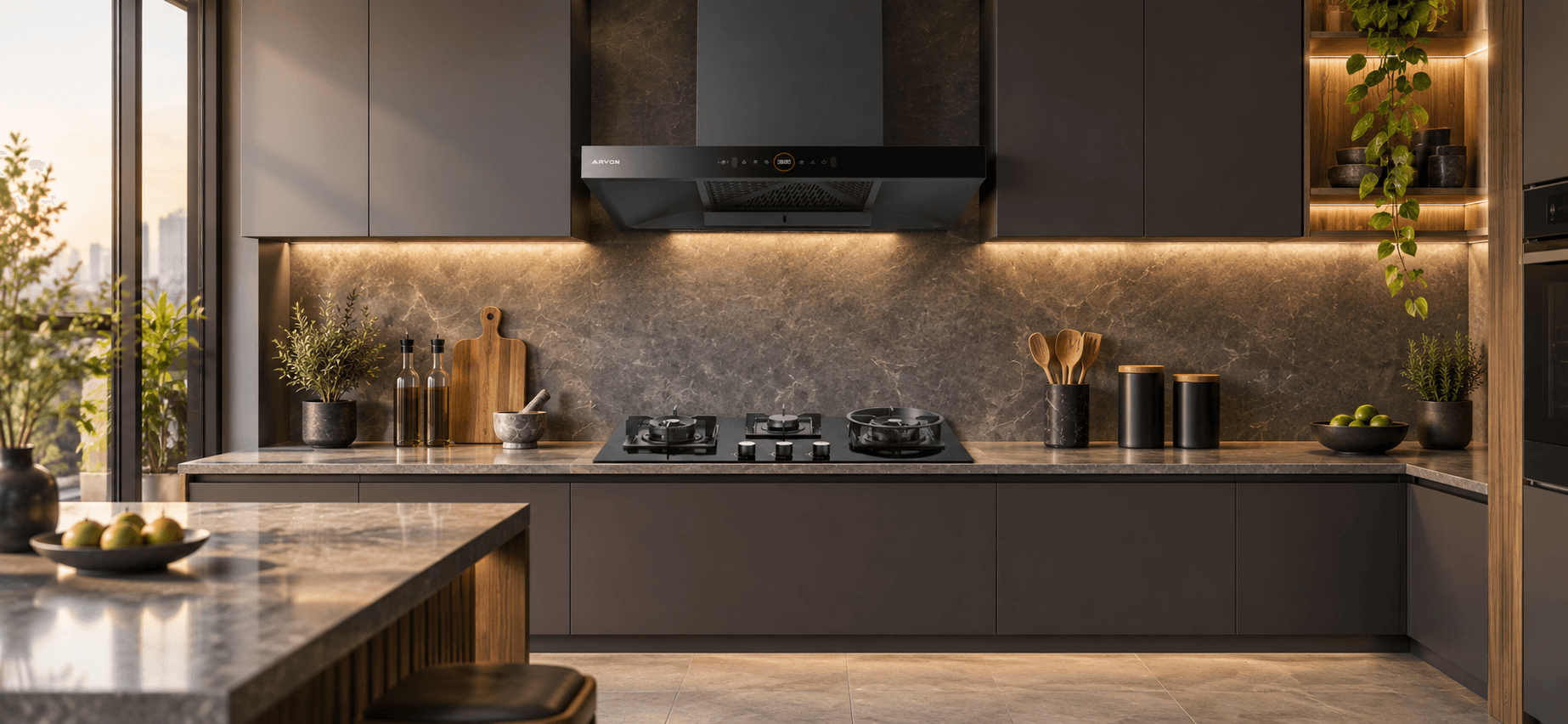
When investing in kitchen appliances, specifications and appearance are important—but quality and durability determine how well an appliance performs after years of everyday use. A premium gas hob, range hood, or oven should not only work well when it is new. It should be engineered to maintain stable performance, safety, and reliability throughout its service life.
This is why build quality should be one of the first things considered when choosing a kitchen appliance. Materials, internal components, motors, burners, glass, controls, safety systems, and manufacturing quality all influence how reliably an appliance performs over time.
For a gas hob, durability begins with the cooking surface and burner system. Heat-resistant toughened glass must withstand repeated exposure to high cooking temperatures, spills, cookware movement, and everyday cleaning. Heavy cast iron pan supports provide a stable platform for cookware and are designed to handle frequent use.
Burner construction is equally important. High-quality brass burners provide strong and consistent flame performance while resisting the demanding conditions created by everyday cooking. On selected Arvon gas hobs, high-output burners are combined with precise flame control, Patented Instant Ignition, and Gas-Saving Technology designed for efficient everyday performance.
Selected Arvon gas hobs are engineered to provide up to 13% gas savings, up to 12% faster cooking, and heating efficiency of up to 63%. These figures are not simply about speed—they reflect how effectively the burner system converts gas into useful cooking heat.
Safety must be considered alongside durability. Features such as the Flame Failure Device (FFD) can automatically stop the gas supply if the flame is accidentally extinguished. Child-lock functions, stable pan supports, dependable ignition components, and strong burner assemblies further contribute to safe and reliable operation.
For a range hood, quality depends heavily on components that customers may not immediately see. The motor, blower, PCB, sensors, internal housing, grease-management system, and body construction all influence long-term extraction performance.
Arvon Range Hoods use fully sealed AC or BLDC motors, depending on the model. A sealed motor design helps protect important motor components from the demanding environment inside a range hood, where heat, grease, moisture, and airborne particles are present during everyday cooking.
The blower system is equally important. Selected Arvon Range Hoods use a patented blower combined with Nano Technology to efficiently separate grease and oil from the airflow. Depending on the model, oil and grease filtration rates reach approximately 90% to 92%, helping reduce the amount of contamination reaching internal components.
This type of grease management is important for long-term performance. Excess grease accumulation around the blower, internal housing, and airflow path can affect cleanliness and eventually reduce extraction efficiency. Effective separation helps the internal system remain cleaner and supports more consistent airflow.
Some Arvon Range Hoods also incorporate an Automatic Self-Cleaning System. On supported models, the system activates after 60 hours of cumulative operation, helping reduce grease buildup inside the range hood and simplify long-term maintenance.
Durability should never mean compromising performance. Arvon models provide Standard IEC airflow from approximately 1440 m³/h to 1560 m³/h, depending on the model, while maximum static pressure ranges from approximately 500 Pa to as high as 1200 Pa on premium BLDC configurations.
Static pressure is particularly important because it indicates the hood’s ability to push air through ducting and resistance. A durable range hood should continue providing effective airflow under real installation conditions—not only produce a high airflow number in unrestricted conditions.
Controls also need to withstand frequent daily use. Touch controls, hand-gesture operation, and 2+1 Turbo speed settings allow users to operate selected Arvon Range Hoods conveniently while reducing unnecessary physical interaction with the appliance.
Modern ovens require the same attention to quality. Strong internal construction, reliable heating elements, durable door mechanisms, good insulation, stable temperature control, and dependable electronic systems all contribute to consistent long-term performance.
Quality also has an important financial benefit. A poorly constructed appliance may initially cost less but can become expensive if it requires frequent repairs, replacement parts, or early replacement. A better-built product can provide greater long-term value by remaining dependable for years.
Warranty and after-sales support should therefore also be considered when evaluating appliance quality. Good engineering should be supported by access to service, genuine parts, and clear warranty coverage.
A premium appliance is ultimately defined by more than appearance or a long specification list. True quality means strong materials, reliable internal components, consistent performance, effective safety systems, thoughtful engineering, and rigorous testing.
Choosing durable kitchen appliances means investing in a kitchen that continues to perform confidently day after day. When quality is built into every component, gas hobs, range hoods, and ovens become trusted parts of everyday life rather than products that need constant attention.